

Here is the honest picture: Jebel Ali is in better operational shape than it was during the 2021 and 2022 pandemic backlog. DP World has invested heavily in berth expansion and yard automation (source: DP World ). Recovery time when disruptions hit is faster than it was three years ago.
Port Congestion at Jebel Ali: What Causes It, Where Things Stand, and How to Route Around It
Breaks down the causes of Jebel Ali port congestion, including upstream disruptions, transhipment volume spikes, and carrier schedule delays, while explaining current pressure on India-UAE and China-UAE lanes. It also outlines practical routing alternatives and key questions UAE importers should ask to assess their freight risk before disruptions hit.
BLOG
Introduction: Import Logistics UAE and the Risk of Single Port Dependency
Jebel Ali port congestion UAE is one of the biggest risks affecting import logistics and freight forwarding operations across the region.
Most of what the UAE imports by sea moves through one port. When it runs, nobody talks about it. When it backs up, importers in Dubai, Sharjah, and Abu Dhabi find out days later through a missed delivery window or a revised arrival estimate from their freight forwarder.
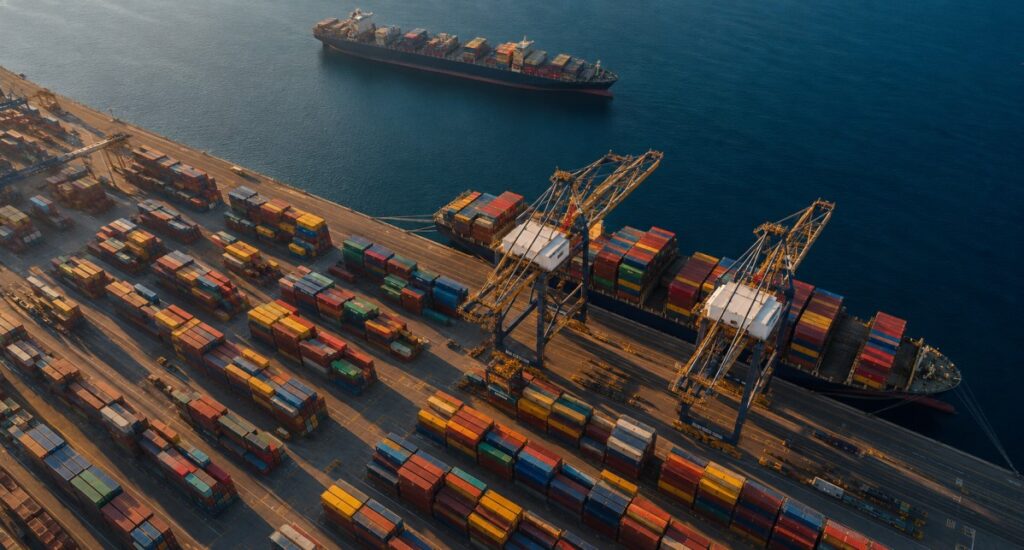
Jebel Ali handles more container volume than any port in the Middle East. It is also a transhipment hub for the broader Gulf and Indian Ocean region, which means it absorbs shocks from shipping disruptions that originate thousands of kilometres away. That combination makes it both the most convenient entry point for UAE importers and the one with the most concentrated risk.
Congestion at Jebel Ali is not a once-every-few-years event. It is recurring, predictable in its causes, and manageable when you have the right setup before it hits.
Jebel Ali port congestion UAE continues to impact delivery timelines and supply chain planning for importers.
What Actually Causes Jebel Ali to Back Up in Supply Chain UAE
Port congestion builds from specific triggers. Knowing them means you can spot when conditions are lining up, rather than finding out when your estimated delivery date shifts two weeks.
Volume Spikes from Upstream Disruptions in Gulf Logistics
Volume spikes from upstream disruptions: When a major global shipping lane gets disrupted, freight that would normally spread across multiple routes concentrates in a smaller number of ports. The Red Sea diversions through 2024 and 2025 made this visible in real time. Vessels that previously came via Suez rerouted around the Cape of Good Hope, compressing arrival schedules at Jebel Ali. A consumer electronics importer in Jumeirah Lake Towers saw her shipment from Shenzhen delayed 18 days in Q1 2025, not because of anything that happened in Dubai, but because her carrier's whole schedule had been thrown off three weeks earlier at origin.
High Transhipment Volumes Impacting Logistics Solutions Dubai
High transhipment volumes: Jebel Ali is not just a destination. Cargo for Saudi Arabia, Qatar, Oman, and parts of East Africa regularly tranships through Dubai. That means the port is under pressure from shipments not even destined for the UAE. During transhipment surges, a port running at 85 percent capacity tips quickly into congestion.
Carrier Schedule Reliability in Freight Forwarding UAE
Carrier schedule reliability: On-time arrival rates for shipping lines have been poor globally for several years. When vessels arrive in a compressed window instead of their scheduled spread, berth allocation becomes competitive. A container sitting at anchor offshore is technically arrived. The carrier's clock is already running.
Customs and Documentation Volume in Import Logistics UAE
Customs and documentation volume: Not all congestion is physical. High throughput periods create pressure on the paperwork side. A container ready to discharge can still sit in the terminal if the customs inspection queue is backed up or if documentation has an error that triggers a hold. A food importer based in Abu Dhabi had a 12-pallet refrigerated shipment from Turkey held for six days in Q4 2025 because of a product classification discrepancy on the certificate of conformity. The cargo sat at port. The cold chain cost was the importer's problem.
Where Things Actually Stand Right Now in Supply Chain UAE
That said, the structural causes of congestion have not gone away. Jebel Ali remains a transhipment hub absorbing volume from multiple global lanes at once. A disruption in the India-Pakistan corridor, a surge in China-Gulf volumes, or a carrier alliance schedule reshuffle can each hit Jebel Ali's berth schedule within weeks.
High-Pressure Trade Lanes in Gulf Logistics Right Now
The two lanes under the most consistent pressure right now are India-UAE and China-UAE. The India-UAE corridor has seen schedule irregularities tied to carrier consolidations and seasonal loading cycles out of JNPT and Nhava Sheva. China-UAE freight volumes remain high and schedule-sensitive. Both lanes run through Jebel Ali as the default UAE entry point, with no automatic fallback for importers when schedules compress.
For businesses running lean safety stock, a week of Jebel Ali congestion translates to 10 to 14 days of effective delivery delay once you account for rescheduled vessel calls, customs queues, and yard dwell time.
Routing Alternatives in Logistics Solutions Dubai Before You Need Them
Routing around Jebel Ali is not always the right call. For most shipments, most of the time, it remains the correct entry point. But knowing the alternatives before a disruption turns an 18-day transit into a 30-day one means you are making a decision, not managing a crisis.
Khalifa Port, Abu Dhabi: About 80 kilometres from Dubai, Khalifa Port handles containers, bulk, and general cargo and has added significant capacity over the past four years. For businesses based in Abu Dhabi or the southern Emirates, it is a direct alternative. For Dubai-based importers, the maths depends on the road freight cost from Abu Dhabi versus the time recovered by avoiding a congested Jebel Ali berth queue.
Fujairah: The east coast port sits outside the Strait of Hormuz and connects directly to east-west shipping lanes. For cargo coming from India or Southeast Asia, a Fujairah call followed by cross-UAE road trucking is a working option that several freight operators already run on a regular basis. The truck leg from Fujairah to Dubai runs two to three hours depending on cargo type and destination.
Khor Fakkan: The container terminal at Khor Fakkan, also operated by DP World, is specifically designed as a congestion bypass option for Jebel Ali. If your trade lane originates in South Asia or Southeast Asia, ask your forwarder whether Khor Fakkan can be used on your specific routing. Not every forwarder will raise this proactively. Many will not mention it at all.
Air freight as a planned decision, not a panic call: Air freight into Dubai makes financial sense on a narrow range of cargo types. But if you have not run the numbers on what a 12-day delay costs your business in lost sales, missed restocking windows, or expedited last-mile charges, you may be underestimating how often the air option actually wins. Have a rate on file for your top three SKUs so the decision takes four hours instead of four days.
Three Questions to Put to Your Freight Forwarder UAE Today
You do not need to wait for a congestion event to understand your current exposure. Ask these three questions now.
Does your forwarder have actual operating relationships at ports beyond Jebel Ali? Not theoretical familiarity with Fujairah or Khalifa Port from a brochure. Relationships. Established carrier connections. Cargo they have actually moved through those ports in the last six months. If not, they cannot reroute you when Jebel Ali is the problem.
How quickly will they flag a schedule change or congestion build-up? The businesses that absorbed the 2025 Red Sea disruption without much damage had forwarders calling them with options. The ones that paid for it had forwarders sending revised invoices after the damage had already landed. That difference is the relationship. Find out which one you have.
Are your lead times and safety stock levels built on realistic port variability? If your reorder triggers assume a clean 18-day China-to-Dubai transit every time, a congestion event at Jebel Ali will periodically catch you short. Most UAE importers know this is a risk. Very few have actually recalculated their safety stock buffers against realistic variability rather than optimistic averages.
Getting the Setup Right with Freight Forwarding UAE Before the Next Disruption
Jebel Ali congestion is manageable. What makes the difference is preparation before the disruption, not recovery after. That means a freight partner with established relationships at multiple UAE ports, lead time assumptions that reflect real port variability, and the ability to make a rerouting call in 24 hours rather than 72.
Logisrch works with UAE and GCC importers to match them with the right freight and logistics service providers for their specific trade lanes and cargo types. Whether you want to map your routing options beyond Jebel Ali, review your current lead time assumptions, or find a freight forwarder who will call you before the problem hits rather than after, Logisrch can connect you with the right partner.
Contact
Get in touch: imran@logisrch.com or visit logisrch.com.
FAQ
Quick Answers to Common Questions
What causes congestion at Jebel Ali port?
Jebel Ali congestion is typically caused by upstream shipping disruptions, high transhipment volumes, carrier schedule delays, and customs or documentation bottlenecks. These factors often combine to create delays across the entire supply chain UAE.
How does Jebel Ali congestion impact freight forwarding UAE operations?
Congestion delays vessel berthing, increases container dwell time, and disrupts delivery schedules. For freight forwarding UAE operations, this leads to missed timelines, higher costs, and reduced reliability for importers.
Which trade lanes are currently most affected?
The India-UAE and China-UAE lanes are under the most consistent pressure. High cargo volumes and schedule variability on these routes directly impact import logistics UAE timelines.
What are the alternatives to Jebel Ali port?
Key alternatives include Khalifa Port in Abu Dhabi, Fujairah on the east coast, and Khor Fakkan. These options are often used as part of logistics solutions Dubai strategies during congestion periods.
How can UAE importers reduce delays in Gulf logistics?
Importers can reduce delays by diversifying routing options, working with experienced freight partners, and planning for variability in lead times rather than relying on fixed schedules.
What should you ask your freight forwarder during congestion?
You should ask whether they have operational experience at alternative ports, how quickly they communicate delays, and whether your lead times reflect real-world variability in freight forwarding UAE.
When should businesses consider air freight in Dubai?
Air freight should be considered when delays significantly impact sales, inventory, or operations. In some cases, it can be more cost-effective than waiting for delayed sea shipments.